

Need to Hire Employees Fast? Fix These 5 Hiring Bottlenecks First
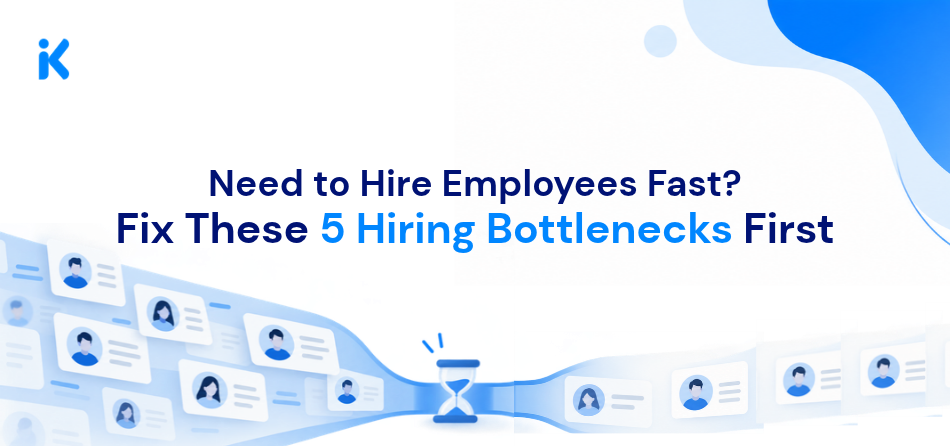
Need to Hire Employees Fast? When a role needs to be filled urgently, the instinct is often to get the job post out faster, attract more applicants, and start interviewing as soon as possible. But having more people available does not automatically make hiring faster. In July 2026, PSA recorded 3.14 million unemployed Filipinos, with the unemployment rate at 6.0%.¹ At the same time, employers globally continue to struggle with finding the skills they actually need. The World Economic Forum’s Future of Jobs Report 2025 found that 63% of employers consider skills gaps a major barrier to business transformation, while 70% expect to hire people with new skills through 2030.²
For companies that need to hire employees, this points to an important distinction: the problem may not always be a lack of candidates. Sometimes, the hiring process itself is making the search take longer than it should.
Hiring faster does not mean rushing a decision. It means identifying where good candidates are unnecessarily losing time.
Here are five bottlenecks worth checking first.
- The role is still unclear when hiring begins
A hiring process can already be slow before the first application arrives. If the team has not agreed on what the role actually needs, recruiters may begin screening against requirements that later change. A hiring manager might initially ask for five years of experience, then realize halfway through the search that a particular skill matters more. By then, recruiters may have already passed over a candidate who’s the most qualified. This becomes even more important as skills change quickly; the World Economic Forum estimates that 39% of workers’ existing skill sets will be transformed or become outdated between 2025 and 2030.²
Before posting the role, decide which qualifications are necessary and which are simply preferred. A clearer target gives recruiters a better chance of recognizing the right candidate when they see one. This also makes it easier for recruiters to find candidates for jobs based on the skills that actually matter, instead of searching against a long list of requirements that may not reflect what the role really needs.
- Applications are coming in faster than they are being reviewed
Getting plenty of applicants sounds like a good problem to have—until the applications begin sitting untouched. When recruiters wait for a large pool to build before they start screening, they create a backlog for themselves and make strong candidates wait unnecessarily. A better approach is to establish the screening criteria early and review candidates as they come in. This does not mean choosing the first qualified person who applies. It means keeping the process moving so promising candidates can progress while the role continues to attract applicants.
- Too many people need to approve the next step
Hiring often involves recruiters, hiring managers, department heads, and sometimes senior leadership. Their input can be valuable, but problems arise when nobody is clear about who actually makes the decision. A candidate finishes an interview, the recruiter waits for the manager, the manager waits for another stakeholder, and several days pass without anything happening. The process does not need fewer people simply for the sake of speed; it needs clearer ownership. Before interviews begin, decide who gives approval and who makes the final call at each stage. Removing uncertainty between steps can save time without lowering the standard for who gets hired.
- Every interview adds time, but not necessarily information
An extra interview can feel like an extra layer of certainty, but it only helps if that conversation answers something the team still needs to know. If three interviewers are asking a candidate the same questions, the company is extending the process without getting much closer to a decision. Each stage should have a purpose, and every conversation should help the team learn something different about the candidate to move closer to a hiring decision. When teams know what they are trying to learn from each interview, it becomes easier to see which stages are necessary and which are simply habits left over from the old hiring process.
- Candidate communication happens only when there is a decision
Not every delay can be avoided. A hiring manager may need more time to review feedback or an internal approval may take longer than expected. The bigger problem is allowing that delay to turn into silence. If candidates do not know what is happening, they cannot tell the difference between a company that needs more time and one that has simply stopped responding. Keeping candidates updated does not require a decision every time; sometimes, a clear timeline is enough. Communication should not be treated as something recruiters do once the process moves forward—it should help keep the process moving in the first place.
Faster hiring starts with removing the waiting
If you need to hire employees quickly, start by looking at where the process is slowing down. Applications waiting for review and candidates waiting for updates can all add unnecessary time to hiring.
With Kalibrr, recruiting teams can keep candidate progress and hiring activity in one place, making it easier to see who is moving forward, where candidates are waiting, and what needs action next. This gives teams better visibility into the hiring process and helps prevent strong candidates from getting stuck between stages. But faster hiring still starts with the process itself: every stage should have a purpose, every decision should have an owner, and candidates should not be left waiting longer than necessary.
Ready to remove the bottlenecks slowing down your hiring process? Explore Kalibrr’s recruitment solutions and see how your team can manage candidates, track hiring progress, and move the right talent forward more efficiently.
If you need to hire employees quickly, start by looking at where the process is slowing down. Applications waiting for review and candidates waiting for updates can all add unnecessary time to hiring.
With Kalibrr, recruiting teams can keep candidate progress and hiring activity in one place, making it easier to see who is moving forward, where candidates are waiting, and what needs action next. This gives teams better visibility into the hiring process and helps prevent strong candidates from getting stuck between stages. But faster hiring still starts with the process itself: every stage should have a purpose, every decision should have an owner, and candidates should not be left waiting longer than necessary.
Ready to remove the bottlenecks to make your hiring process faster? Explore Kalibrr’s recruitment solutions and see how your team can manage candidates, track hiring progress, and move the right talent forward more efficiently.
References
- Philippine Statistics Authority. Number of Employed Persons Rose to 49.21 Million as Underemployment Declined in July 2026. September 8, 2026.
https://psa.gov.ph/content/number-employed-persons-rose-4921-million-underemployment-declined-july-2026 - World Economic Forum. The Future of Jobs Report 2025.
https://www.weforum.org/publications/the-future-of-jobs-report-2025/digest/


No comment available yet!