

Recruitment Software: How to Modernize Your Hiring Process
Recruitment Software – When a company needs to hire, the first instinct is often to focus on finding the right candidate. Companies would post a job, collect applications, schedule interviews, and try to move someone through the process as quickly as possible. However, as the number of applicants increases, managing the process manually can become a problem of its own. Recruiters may find themselves switching from spreadsheet to spreadsheet, different email threads, and messaging platforms just to keep track of where each candidate stands.
This is where having a human resource (HR) recruitment software can make a difference. An applicant tracking system (ATS) is a recruitment tool that helps employers and recruiters organize candidate information, track applicants through hiring stages, and manage recruitment activities. Instead of keeping candidate resumes, contact information, interview notes, and communication across separate spreadsheets or platforms, an ATS brings everything into one centralized system. This allows recruiters to organize applicants and keep hiring teams aligned throughout the recruitment process.
Modernizing recruitment does not necessarily mean replacing the human side of hiring with an ATS. Instead, it means combining technology to reduce the administrative work that can slow recruiters down. Here are five ways an ATS can help your hiring teams save time, stay organized, and make your hiring process more efficient.
1. Keep candidate information in one place
One of the biggest challenges in recruitment is keeping track of information scattered across different platforms. A candidate’s resume might be stored in one folder, interview notes in another, and email conversations in another place. As the number of applicants increases, finding the right information can take up more time than necessary.
Using an ATS allows recruiters to track candidates through different stages, making it easier to see who is currently being screened, interviewed, or waiting for the next steps. This gives recruiters a clear picture of the hiring process without having to maintain multiple trackers.
2. Automate Repetitive Tasks
Recruitment software can automate repetitive tasks like sending emails, organizing applications, updating candidate statuses, and scheduling different stages of the hiring process. An ATS can offer features such as messaging templates, interview notes for different candidates, automated workflows, and the ability to track the steps of a candidate efficiently.
This gives your recruiters more time for the parts of the hiring process that require human judgment. Instead of spending hours performing repetitive tasks, recruiters can spend more time communicating with candidates, evaluating them efficiently and effectively.
3. Makes the recruitment process easier to see
The hiring process can become difficult to manage when recruiters cannot immediately tell what is happening with each candidate. An applicant may have already completed an interview but is still waiting for feedback. Another may have been shortlisted but not yet contacted. Without a clear system, these updates can easily get lost.
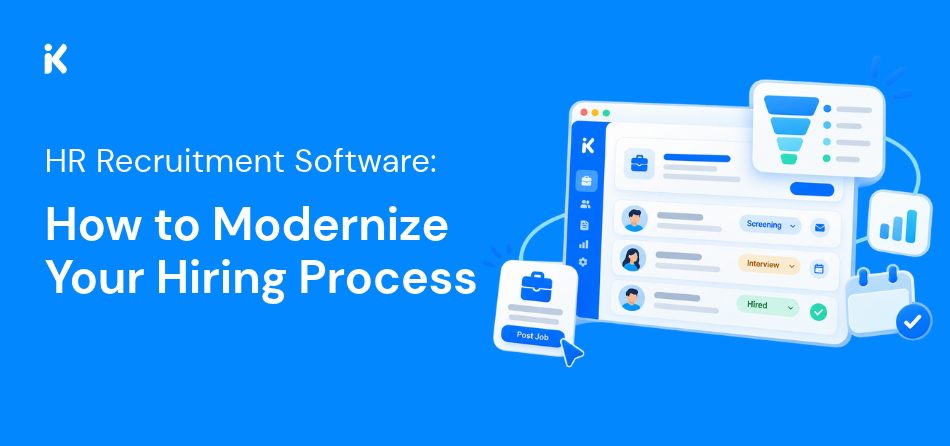
An ATS can provide a way to visualize and monitor candidate progress throughout the different stages of hiring. Kalibrr, for example, provides recruiters with tools to manage applicants and view candidates across different stages of the hiring process. This makes it easier to identify which candidates need action and where delays may be occurring.
4. Improve communication with candidates
When recruiters communicate through different platforms, it can be difficult to manage a complete record of conversations. An ATS centralizes communication and gives hiring teams better visibility into the recruitment process, reducing the need for manual tracking, and freeing up more time to focus on evaluating candidates. This matters because delays in communication can affect the candidate experience. An organized communication process helps candidates receive timely updates and leaves them with no questions unanswered.
5. A pool for future hiring
An ATS can maintain a searchable candidate database, including previous applications, interactions, and people who may not currently be actively looking for jobs. This is one of the biggest advantages of moving beyond spreadsheets and offline files. Applicant tracking systems can maintain information that recruiters can search when future hiring needs arise. This removes the need to start from scratch every time a new position becomes available.
6. Modernizing Your Hiring Process
When spreadsheets and documents are no longer enough to manage your recruitment information and starts to slow down workflow, an ATS can provide a lot more capability, versatility, and functionality. Choosing the right ATS allows you to do more with what you have.
Kalibrr brings these activities into a more organized recruitment workflow, giving employers the tools to manage the hiring process from start to finish. Recruiters can access a pool of 9 million plus jobseekers, post job openings, screen and shortlist applicants, and move them from application to job offer. Recruiters can also integrate custom assessments to better evaluate candidates, while using built-in communication tools to stay connected with applicants throughout the process. At the end of the day, Kalibrr provides recruiters with tools to manage hiring in one platform.
Looking to modernize your hiring process? Explore how Kalibrr can help you reach the right candidates, stay organized, and manage your hiring process all in one place.

Belum ada komentar yang tersedia!